

The Risks of Cold Weather Epoxy & Polyaspartic Installation
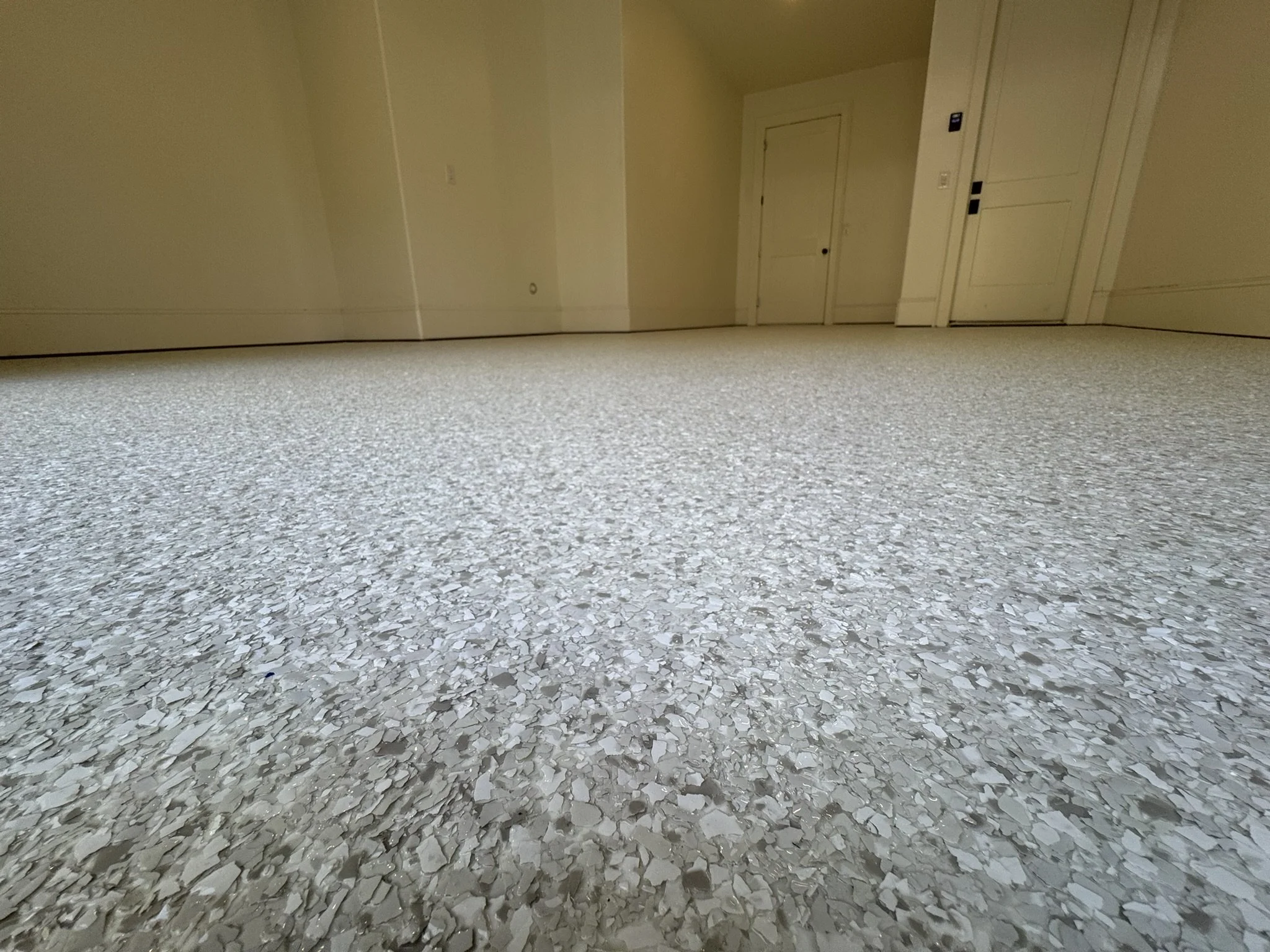
Flake Epoxy Garage Flooring
Cashiers, NC
When North Georgia’s winter hits and temperatures dip below 50°F, many homeowners and facility managers think it’s the perfect time to get that floor project out of the way. However, in the world of professional concrete coatings, the thermometer is one of our most important tools.
At Tri-Co Industries, Inc., we believe in doing the job right the first time. That means understanding the science behind the chemicals we use. Installing epoxy, polyaspartic, or urethane coatings in cold conditions can lead to a host of "invisible" problems that show up weeks or months later (nothing like learning the hard way.)
The Science of the "Cold Snap"
Most high-performance coatings rely on a chemical reaction to harden (cure). When the air and concrete temperatures drop below 50°F, that reaction slows down—or in some cases when the temperature drops enough curing stops entirely.
Poor Adhesion: Concrete is porous. When it's cold, the coating becomes thicker (more viscous) and can't "wet out" or sink into the pores of the concrete. This is the number one cause of floor failure and "hot tire pickup."
The Never-Ending Cure: A floor that should be walk-on ready in 24 hours might stay "tacky" for days in the cold. This allows dust, debris, bugs and paw prints to become a permanent part of your floor.
Epoxy "Blushing": In cold, damp weather, epoxies can develop a greasy, white film on the surface known as a "blush." This isn't just an eyesore; it prevents topcoats from sticking, leading to peeling.
How We Protect Your Investment
We don't leave your floor to chance. At Tri-Co Industries, we take steps to actively manage the environmental variables we can control like air temperature to ensure a "bulletproof" finish:
Slab Temp vs. Air Temp: We don't just check the weather app. We measure the surface temperature of your concrete. Concrete holds the cold much longer than the air does, and we won't apply product until the slab itself is ready.
Climate Control & Monitoring: For indoor or commercial projects, we work with clients to ensure the space is pre-heated to necessary temps before proceeding with installation of epoxy flooring.
The "Wait for the Best" Policy: If the conditions aren't right, we’ll tell you. We would rather reschedule a job for a warmer window than install a floor we know won't meet our standards.
The Reward: Superior Durability
A coating that cures in the "sweet spot" of 60°F to 80°F is fundamentally superior. The chemical bonds are tighter, the finish is glossier, and the adhesion to the concrete is permanent. By respecting the environment, we ensure your floor looks as good in ten years as it does on day one.
Don't settle for a "seasonal" floor. Trust the experts who know the science.

That one time we got snowed in at a job an hour away from our shop — anything to get it done!
